
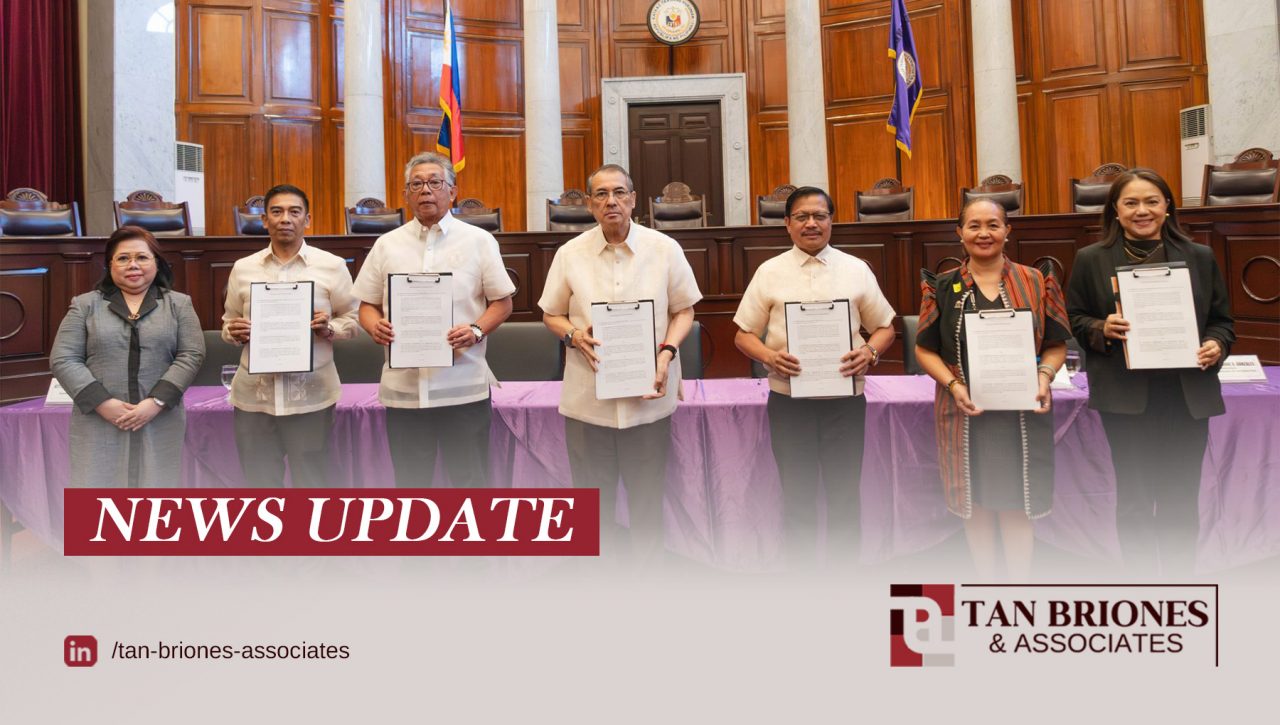
A more structured pathway for delivering free legal aid to indigent Filipinos is being put in place through a new inter-agency referral and certification system.
The Supreme Court (SC), together with the Commission on Human Rights (CHR), National Anti-Poverty Commission (NAPC), National Commission on Indigenous Peoples (NCIP), and Presidential Commission for the Urban Poor (PCUP), formalized the partnership through a Memorandum of Understanding (MOU) signed on March 3, 2026, at the SC En Banc Session Hall in Manila, establishing coordination under the Unified Legal Aid Service (ULAS) framework.
SC Associate Justice Alfredo Benjamin S. Caguioa, chairperson of the ULAS Board, said the initiative aims to address the gap between legal rights and access to legal assistance.
“ULAS is the bridge designed to close that gap,” Caguioa said, noting that vulnerable groups—including displaced families, indigenous communities, and victims of human rights violations—share a common need for legal representation.
Under the agreement, partner agencies are tasked to identify, assess, and certify qualified beneficiaries based on their respective mandates.
The Commission on Human Rights covers individuals facing human rights violations, the National Anti-Poverty Commission oversees disadvantaged sectors under Republic Act No. 8425, the National Commission on Indigenous Peoples assists indigenous peoples with limited access to justice, and the Presidential Commission for the Urban Poor handles underprivileged urban families within the poverty threshold.
Once certified, beneficiaries are to be referred through a structured system that matches them with lawyers required to render pro bono legal aid under the ULAS Rules and Manual.
Meanwhile, the ULAS Office will oversee implementation, including the recognition of beneficiary certifications, issuance of advisories, and development of mechanisms to evaluate performance and recommend reforms.
The ULAS Rules, which took effect on February 3, 2025, require covered lawyers to render at least 60 hours of pro bono legal aid every three years, including court representation, legal counseling, document drafting, developmental legal assistance, outreach participation, and notarization.
“The bridge we are building leads directly to them,” Caguioa said. “But the distance will narrow only if we choose to cross it.”
Follow Tan Briones & Associates on LinkedIn for more legal updates and law-related articles.