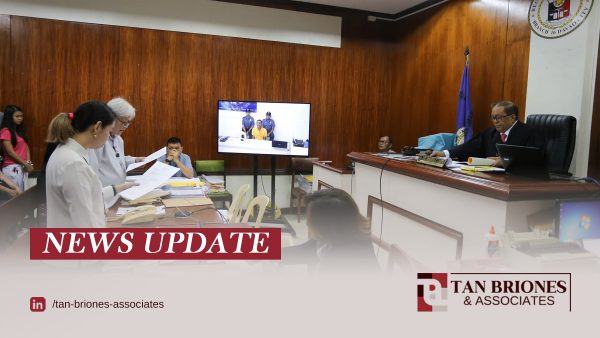

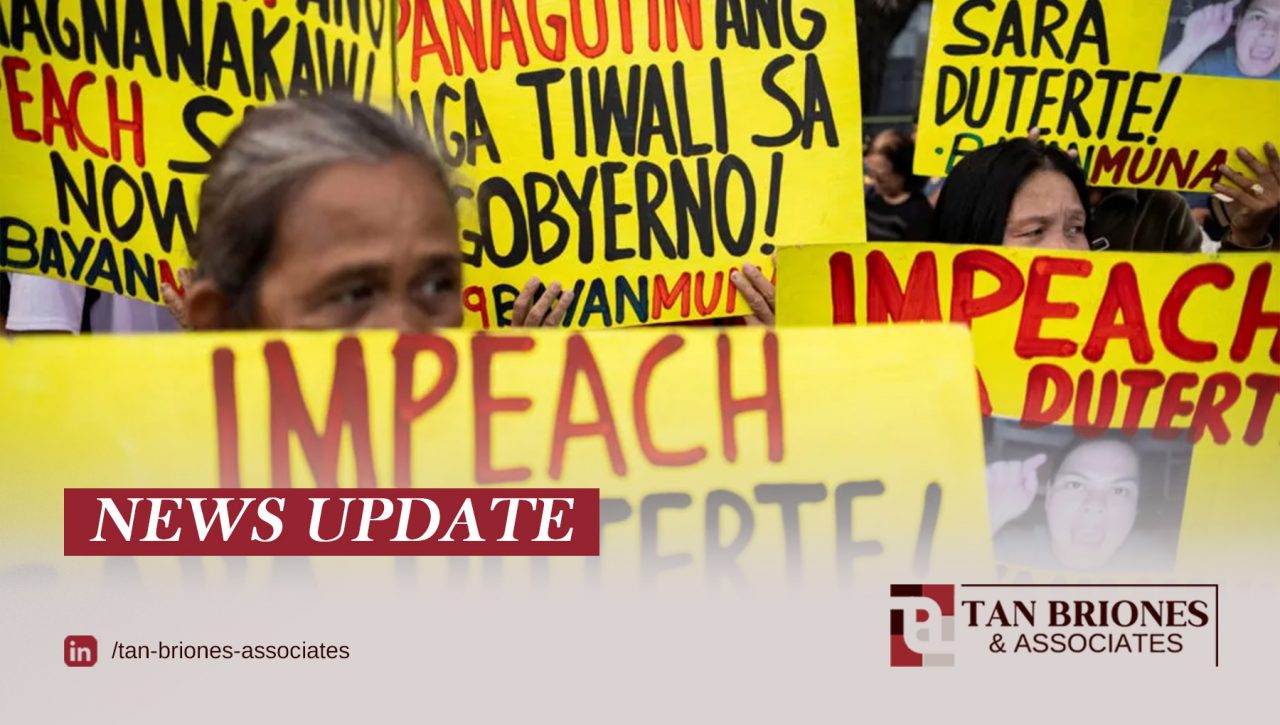
The House Committee on Justice has found probable cause for the impeachment of Vice President Sara Duterte, advancing consolidated complaints to the House plenary and moving the process toward a possible Senate trial.
In a unanimous vote of 53 members following a series of clarificatory hearings, the panel determined that the allegations—ranging from misuse of confidential funds to unexplained wealth and alleged threats against top officials—are supported by sufficient evidence to warrant the preparation of Articles of Impeachment.
The committee also approved the consolidation of two complaints and directed the drafting and transmittal of its report.
The vice president previously faced an impeachment complaint that was voided by the Supreme Court (SC) in 2025 on procedural grounds, prompting the House to adopt a more cautious approach by first subjecting the current complaints to committee proceedings rather than immediately transmitting them upon obtaining the constitutionally required one-third vote.
Committee Determination of Probable Cause
The panel’s finding followed multiple hearings where witnesses and resource persons presented testimonial and documentary evidence.
Senior Deputy Minority Leader Leila de Lima, who endorsed one of the complaints, said probable cause in impeachment refers to a finding that alleged impeachable acts are supported by evidence based on testimonies and documents presented during the hearings.
“These pieces of evidence… are clear, consistent, preponderant and mutually reinforcing,” De Lima said, adding that “there exists probable cause to impeach the vice president.”
Consolidation of Complaints and Transmittal of Articles of Impeachment
The committee approved the consolidation of the two complaints to facilitate the drafting of a unified set of Articles of Impeachment.
De Lima said consolidation is intended “to prevent duplication… and manage the risks of confusion, inconsistency, and dilution of charges.”
The panel will prepare a committee report containing the consolidated Articles, which will be furnished to the respondent and all House members for review, in line with guidance from the SC requiring a reasonable period for consideration.
Upon approval of the report, the Articles of Impeachment will be transmitted to the House plenary.
Under the Constitution, at least one-third of all House members—106 out of 318—is required to approve the Articles and formally impeach the vice president.
Evidentiary Basis for Probable Cause
The committee’s determination of probable cause was anchored on testimonial and documentary evidence presented during the hearings, as well as submissions from key government agencies, including:
- Alleged misuse of confidential funds: Evidence cited the purported irregular disbursement of over ₱600 million in confidential funds allocated to the Office of the Vice President and the Department of Education, with issues raised on liquidation, documentation, and authorized use, as flagged in audit findings.
- Suspicious bank transactions: The Anti-Money Laundering Council (AMLC) reported billions of pesos in covered and suspicious transactions linked to accounts associated with Duterte and her relatives, raising questions on consistency with declared assets and sources of income.
- Disbursement irregularities: Findings from the Commission on Audit (COA) and National Bureau of Investigation (NBI) pointed to possible irregularities in the release and liquidation of confidential funds, including red flags in acknowledgment receipts and inconsistencies in supporting documentation.
- Questionable cash handling and distribution practices: Testimony presented before the committee claimed that large sums of cash allegedly sourced from confidential funds were handled and distributed through intermediaries, including assertions that substantial amounts were disbursed within a short period, raising concerns on traceability and compliance with standard accounting procedures.
- Authenticated video evidence on alleged threats: The NBI reported that a video containing statements attributed to Duterte was authenticated and not altered, and was cited in relation to allegations of threats against senior government officials.
Respondent’s Position and Due Process Issues
Duterte has denied the allegations and did not attend the committee hearings, opting instead to issue public statements through her legal team.
Her lawyers argued that the proceedings “departed from the constitutional design,” contending that the inquiry went beyond the verified complaints and their attachments and delved into matters that should be addressed during a full impeachment trial before the Senate.
They also raised due process concerns, maintaining that the scope of the hearings effectively resembled a trial on the merits rather than a preliminary determination of probable cause.
Committee chair Gerville Luistro rejected these claims, asserting that the panel’s proceedings were limited to establishing probable cause and were conducted within constitutional bounds.
Luistro cited the conduct of multiple hearings, the presentation of testimonial and documentary evidence, and repeated invitations extended to the vice president to appear and respond to the allegations.
Senate Trial and Conviction Threshold
If the required one-third vote is reached in the House, the case will be transmitted to the Senate, which will convene as an impeachment court.
A two-thirds vote of all senators, or at least 16 out of 24, is required for conviction, which would result in removal from office and disqualification from holding public office.
Follow Tan Briones & Associates on LinkedIn for more legal updates and law-related articles.