
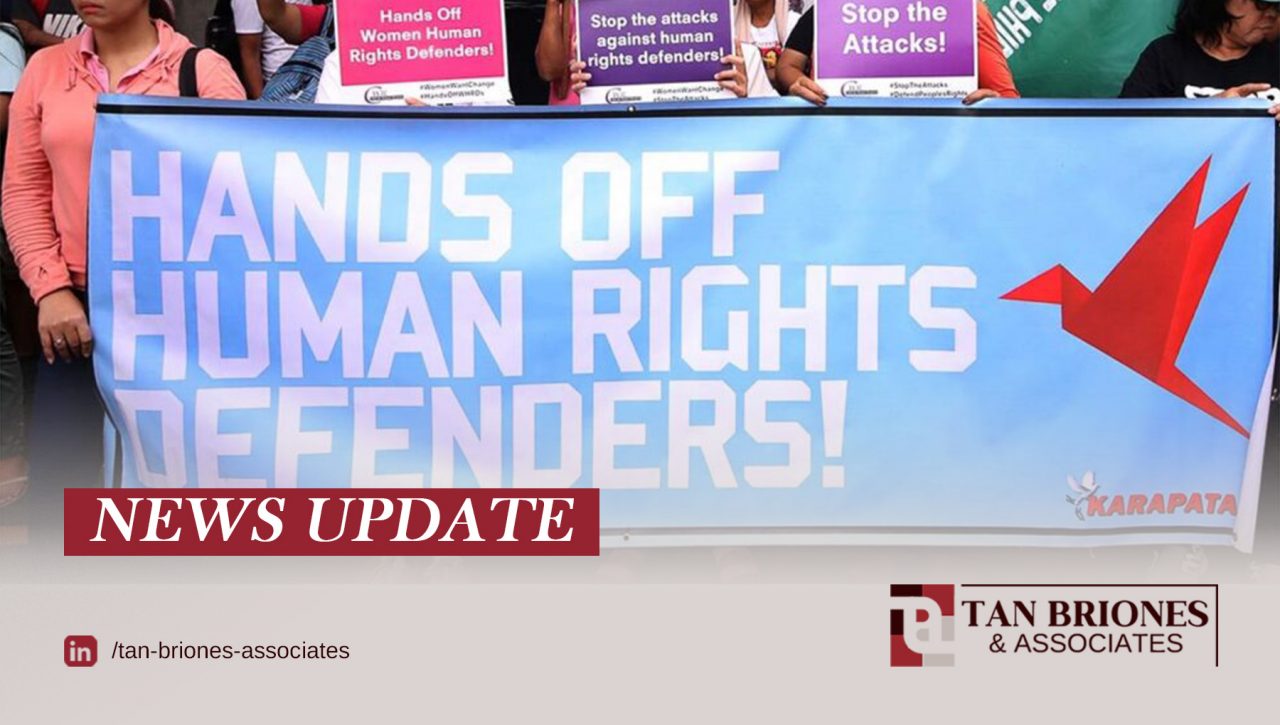
In a renewed push to end red-tagging, the Commission on Human Rights (CHR) has urged all branches of government to strengthen legal and institutional safeguards against the practice after a nationwide inquiry found that it continues to expose human rights defenders to harassment, arbitrary detention, enforced disappearances, and killings.
The CHR called on Congress to pass a law defining and penalizing red-tagging, urged the executive branch to adopt a comprehensive policy prohibiting the practice, and asked the judiciary to strengthen protective writs such as amparo and habeas data.
The recommendations followed the release of the CHR’s 2025 National Inquiry on red-tagging, which gathered testimonies and expert inputs from government, legal groups, and civil society across Luzon, Visayas, and Mindanao.
“Red-tagging is not a harmless label. It creates a real and well-founded risk of harm,” the Commission said.
Inquiry findings
According to the inquiry, red-tagging persists as a pattern of labeling individuals and groups as “communists,” “terrorists,” or “enemies of the State” without due process, often through public statements and online platforms. Those frequently targeted include journalists, lawyers, labor leaders, students, Indigenous Peoples, religious workers, and community organizers engaged in advocacy and civic work.
The report said the practice threatens fundamental rights, including life, liberty, security, freedom of expression, association, and due process, while contributing to a “shrinking of civic space” in the country.
The inquiry documented cases in which individuals subjected to red-tagging allegedly experienced surveillance, harassment, threats, arbitrary detention, enforced disappearances, and killings, including public branding through posters, tarpaulins, and social media posts.
“The practice of red-tagging appears to incriminate an individual or a group for the mere holding of ‘leftist’ ideologies, characterizing them as ‘rebels’ or ‘subversives,’” the report stated.
The CHR said the absence of a specific law penalizing red-tagging has resulted in fragmented protection and limited accountability despite existing legal remedies.
Recommended reforms
It called on the executive branch to adopt a comprehensive policy prohibiting red-tagging, strengthen accountability mechanisms, and review alleged abuses linked to counter-insurgency operations.
The CHR also urged Congress to pass legislation defining and penalizing red-tagging and to review existing anti-terrorism laws.
The judiciary, meanwhile, was urged to strengthen protective writs such as amparo and habeas data and ensure the speedy resolution of red-tagging cases.
The inquiry also proposed guideposts for defining red-tagging in law, including labeling individuals as communists or insurgents without due process, public dissemination of such accusations, and the creation of a well-founded fear of harm.
The Commission said counter-insurgency and counter-terrorism measures must remain anchored in human rights obligations.
“Ultimately, upholding the dignity, safety, and freedom of human rights defenders is integral to strengthening democratic space and the rule of law,” the CHR said.
Follow Tan Briones & Associates on LinkedIn for more legal updates and law-related articles.