
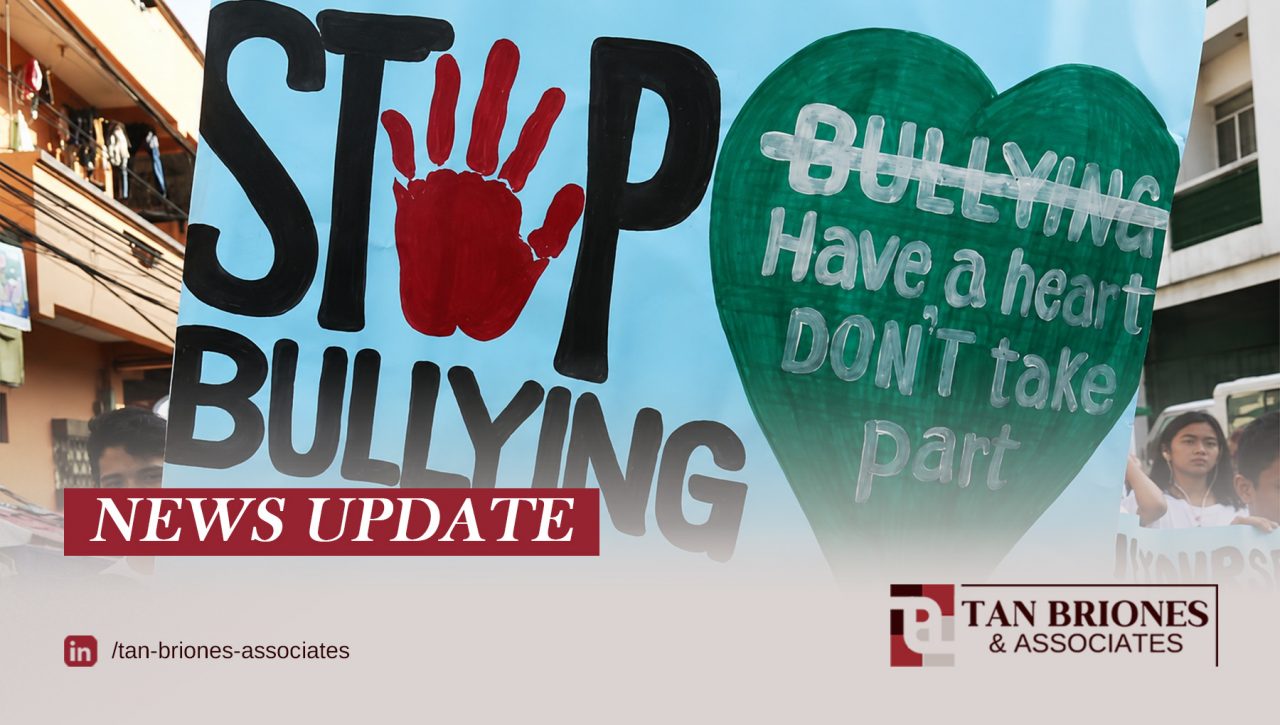
A bill seeking to extend anti-bullying protections to colleges and technical-vocational schools has been filed in the House of Representatives amid persistently high bullying rates and gaps in schools’ compliance with existing safeguards.
House Bill No. 10038, or the proposed Expanded Anti-Bullying Act, would broaden the coverage and definition of bullying and require educational institutions to strengthen prevention, reporting, intervention, and accountability mechanisms.
Akbayan Party-list Reps. Jose Manuel “Chel” Diokno, Percival Cendaña, and Dadah Kiram Ismula filed the measure with Dinagat Islands Rep. Kaka Bag-ao on July 8.
“More than a decade after the enactment of Republic Act (RA) 10627, otherwise known as the Anti-Bullying Act of 2013, bullying remains a pervasive and alarming problem in Philippine educational institutions,” the bill’s explanatory note read.
The measure would expand the coverage of Republic Act No. 10627 beyond basic education to include higher education institutions and technical-vocational schools. It would also cover bullying committed by teaching and nonteaching personnel outside the scope of their official duties.
HB 10038 would broaden the definition of bullying to include acts that humiliate, exclude, or target a person based on actual or perceived characteristics, including age, religious belief, culture, ethnic origin, political inclination, social class, sex characteristics, disability, sexual orientation, gender identity or expression, and other status.
The 2022 Programme for International Student Assessment found that 43 percent of girls and 53 percent of boys in the country experienced bullying several times a month—more than double the averages among member countries of the Organisation for Economic Co-operation and Development.
Meanwhile, data from the Second Congressional Commission on Education showed that about 10,018 public schools had yet to fully comply with anti-bullying policy requirements.
To strengthen prevention and early intervention, the bill would require schools to identify learners showing signs of bullying, social isolation, emotional distress, violent behavior, self-harm, or other safety risks and refer them to mental health professionals when necessary.
Schools would also establish student support teams composed of administrators, guidance counselors, teachers, and other appropriate personnel to address serious or repeated bullying incidents and other behavioral concerns.
For anonymous complaints, the bill provides that: “Any anonymous report received shall prompt the school to initiate a preliminary safety assessment.”
The Department of Education (DepEd), Commission on Higher Education (CHED), and Technical Education and Skills Development Authority (TESDA), in consultation with stakeholders, would establish standardized complaint mechanisms with mandatory timelines, confidentiality safeguards, and clear appeal procedures.
In addition, schools would periodically assess bullying, student well-being, school safety, and the effectiveness of their policies to guide prevention, intervention, and resource allocation, subject to data privacy and confidentiality requirements.
The bill would also require annual personnel training on bullying prevention, conflict de-escalation, mental health awareness, child protection, and trauma-informed responses.
Further, it would institutionalize reforms introduced under the revised implementing rules and regulations of the Anti-Bullying Act of 2013 and DepEd Order No. 6, series of 2026, including the recognition of social and gender-based bullying.
If enacted, school administrators and personnel who fail to comply with the law could face administrative sanctions, without prejudice to civil or criminal liability.
Follow Tan Briones & Associates on LinkedIn for more legal updates and law-related articles.