
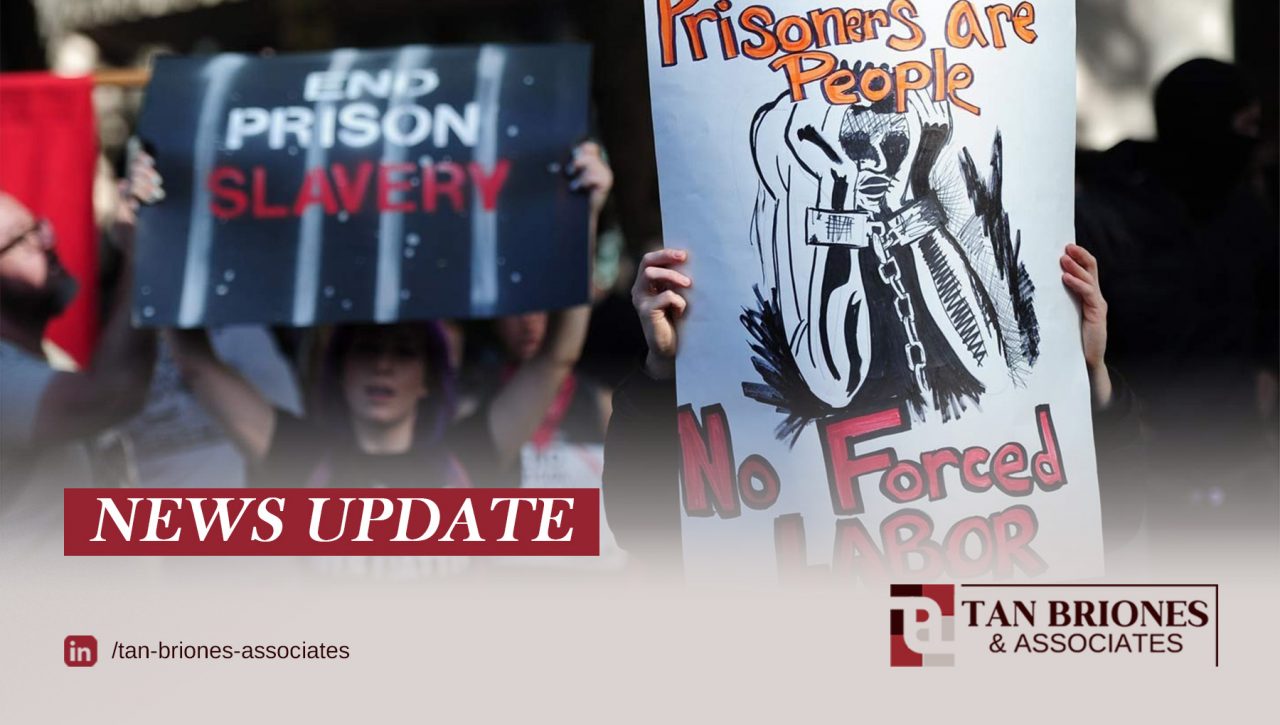
Imported goods produced wholly or in part through forced labor could be barred from entering the Philippine market under a new inter-agency mechanism establishing procedures to investigate suspected violations and enforce import prohibitions.
The Joint Administrative Order (JAO), signed on July 24 by the Department of Trade and Industry (DTI), Department of Labor and Employment (DOLE), and Department of Finance (DOF), creates an Inter-Agency Committee to receive complaints, investigate imported goods suspected of being produced through forced labor, and recommend appropriate enforcement actions.
Meanwhile, the Bureau of Customs (BOC) will implement measures to prohibit the importation of goods found to have been produced wholly or partly through forced labor.
Under the JAO, the committee will receive, evaluate, and investigate reports involving suspected forced-labor goods, while facilitating information-sharing among government agencies. Based on its findings, it will recommend appropriate action, with the BOC enforcing import prohibitions.
DTI Secretary Cristina Roque said the JAO provides a mechanism for addressing imported goods linked to labor exploitation and strengthens inter-agency coordination in investigations and enforcement.
“This Joint Administrative Order provides a mechanism for addressing concerns involving imported goods suspected of having been produced wholly or in part through forced labor. It strengthens interagency coordination in receiving and evaluating information, conducting investigations, and recommending appropriate actions in accordance with applicable laws, rules, and regulations. This is about protecting people and supporting fair competition,” Roque said.
The order aligns with the Philippines’ obligations under International Labour Organization Conventions No. 29 and No. 105 on forced labor and Republic Act No. 10863, or the Customs Modernization and Tariff Act, which authorizes the government to prohibit the importation of goods produced through such labor.
DOLE Secretary Francis Tolentino said the mechanism reinforces the country’s commitment to workers’ rights and compliance with international labor standards.
“I hope through this mechanism, we will showcase to the entire world, not just the Philippines—not just ASEAN—that the Philippines is trailblazing with respect to prohibition against forced labor, respect to workers’ dignity, as well as the integrity of free trade,” Tolentino said.
DOF Secretary Frederick Go said goods linked to labor exploitation undermine legitimate businesses and workers, underscoring the need to prevent them from entering the Philippine market.
“Goods produced through forced labor have no place in our market. They undermine our domestic workforce, penalize law-abiding businesses, and allow unfair competition. When forced labor goods cross our borders, compliant Filipino enterprises and workers pay the price. That is why we need to take decisive action,” Go said.
DTI Undersecretary and BOI Managing Head Ceferino Rodolfo said the Philippines will strengthen cooperation with other countries by using international reporting systems, traceability mechanisms, databases, and investigations to help identify goods suspected of being produced through forced labor.
He added that discussions with United States trade officials on forced-labor safeguards have been positive and expressed hope that the new rules would demonstrate the country’s compliance with international labor standards.
The committee will be chaired by the DTI and vice-chaired by the DOLE, with the DOF, BOC, BOI, and Philippine Economic Zone Authority (PEZA) as members.
Follow Tan Briones & Associates on LinkedIn for more legal updates and law-related articles.