
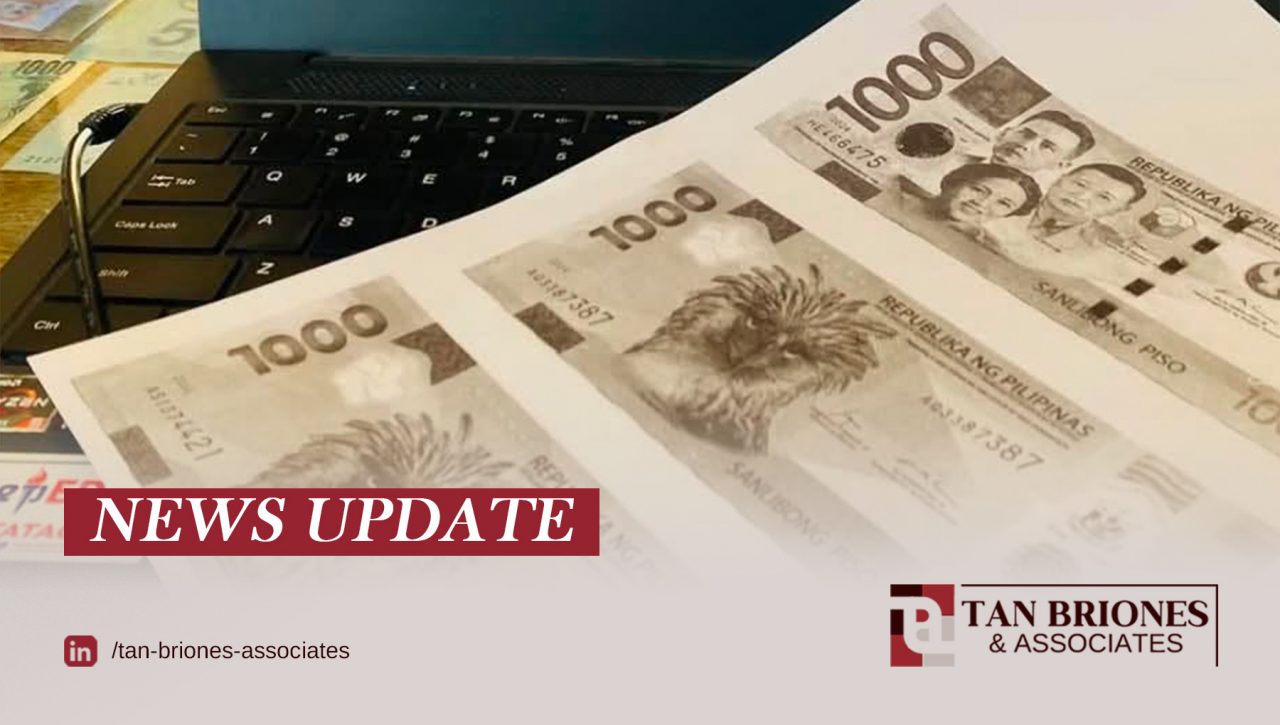
The Bangko Sentral ng Pilipinas (BSP) has reminded the public that reproducing images or facsimiles of Philippine banknotes without prior authorization is prohibited by law and may result in five to 10 years of imprisonment.
In a public advisory dated July 11, 2026, the BSP said no person or entity may print, photocopy, distribute, or use any image or facsimile of a Philippine banknote without its prior authorization, regardless of whether the reproduction is in black and white, in color, or in any combination of colors.
“The BSP may authorize the reproduction of Philippine banknotes only for educational, historical, or numismatic purposes that help promote currency integrity, subject to the conditions prescribed under the Circular,” the central bank said.
The advisory came amid social media posts joking that photocopied peso bills could be used as legal tender following a statement made during the impeachment trial of Vice President Sara Duterte on the treatment of duplicates under the rules on evidence.
During the proceedings, a private prosecutor explained that a duplicate of a document or a digital printout may be considered an original under the rules on evidence if its authenticity is not disputed. The statement was taken out of context online, with some social media users satirically suggesting that the rule also applied to photocopied peso bills.
The evidentiary rule, however, concerns the admissibility of documentary evidence in legal proceedings and does not make reproduced banknotes legal tender.
The prohibition on reproducing banknotes is governed by BSP Circular No. 829, Series of 2014, which regulates the reproduction and use of facsimiles or other representations of legal tender Philippine banknotes.
Under the circular, the prohibition covers the design, engraving, printing, production, issuance, distribution, circulation, or use of any handbill, advertisement, placard, circular, card, or other object bearing the facsimile, likeness, or similarity of a Philippine banknote or any part of it. Prior authorization must be secured from the BSP governor or a duly authorized representative.
However, the BSP may authorize reproductions for illustrations in articles, books, journals, newspapers, and similar materials, as well as for numismatic, educational, historical, newsworthy, or other purposes that maintain, promote, or enhance the integrity and dignity of Philippine currency.
In such cases, reproductions must be either less than three-fifths of the size of the banknote being depicted or more than one-and-a-half times its size and may be used only for the approved purpose.
In January 2022, the BSP issued a similar warning after authorities arrested an individual suspected of selling money or cash envelopes bearing the image and design of the 1,000-piso New Generation Currency banknote.
Under the circular, unauthorized reproduction is punishable by imprisonment of five to 10 years. If the Revised Penal Code prescribes a heavier penalty, the greater penalty will apply.
Follow Tan Briones & Associates on LinkedIn for more legal updates and law-related articles.