
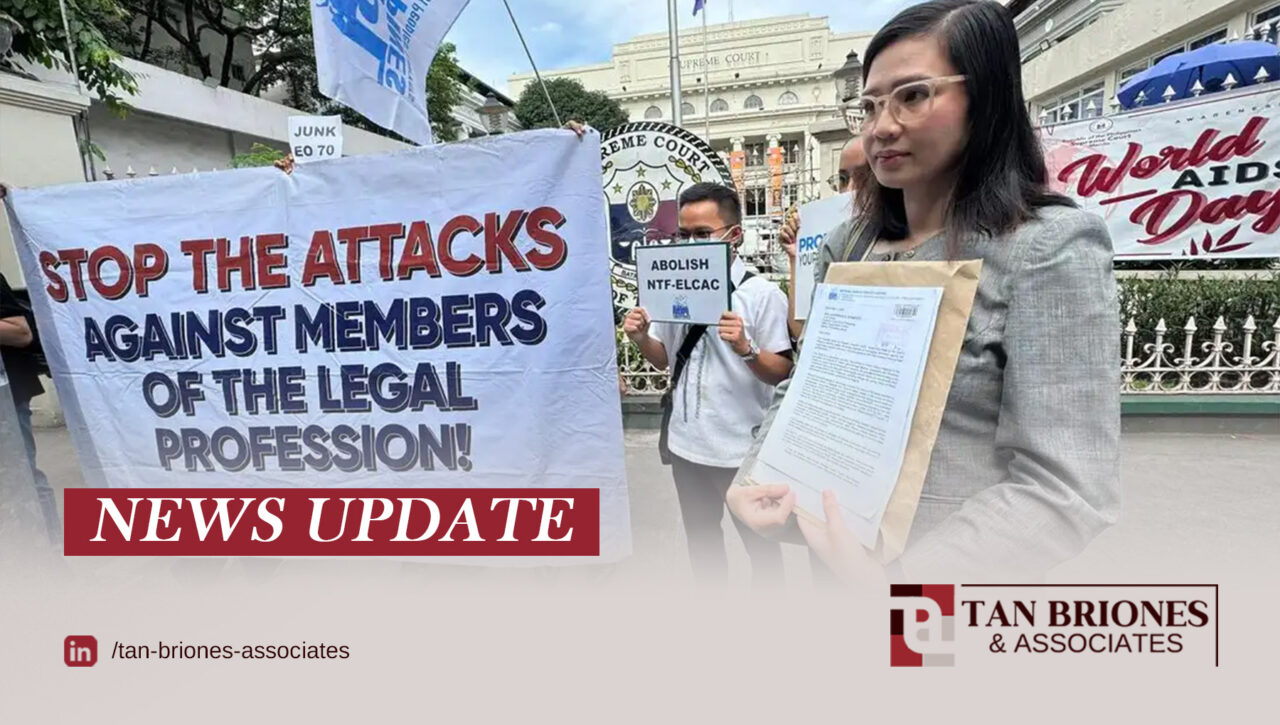
The National Union of Peoples’ Lawyers (NUPL) and the Integrated Bar of the Philippines (IBP) have urged the Supreme Court (SC) to take decisive action against the red-tagging of lawyers, after a supposed list linking NUPL to underground organizations was submitted as evidence in a criminal case pending before a Metro Manila trial court.
In a December 5 letter, the NUPL urged the SC to take note of the document’s submission, adopt concrete protection measures for threatened lawyers, and convene a national dialogue with the Bench, Bar, and civil society, a call publicly backed the next day by the IBP.
The groups warned that the incident signals an escalation of efforts to intimidate members of the legal profession and could undermine the administration of justice.
The letter coincides with the seventh anniversary of Executive Order No. 70, which created the National Task Force to End Local Communist Armed Conflict (NTF-ELCAC).
The NUPL said the list, described as identifying “underground mass organizations and front organizations” of the CPP-NPA-NDF and explicitly naming the group, was submitted by the counsel for one of the defendants in a pending case.
The organization called the act “brazen,” noting that red-tagging, which was once spread through public statements and social media, has now seeped into formal court proceedings.
For NUPL, the submission illustrates how “red-tagging is creeping into the formal processes of the legal system,” warning that such claims, when inserted into official court records, place lawyers at heightened risk.
The group also cited earlier incidents involving former NTF-ELCAC officials, including online posts inciting harm against members of the legal profession who purportedly “give cover to the CPP-NPA-NDF.”
The organization noted that concerns over red-tagging have been echoed internationally. UN Special Rapporteur on freedom of opinion and expression Irene Khan, following her 2024 country visit, urged the abolition of the Task Force, describing it as “outdated” and citing its harmful effects on civil society, academic freedom, and public discourse.
The judiciary itself has previously recognized the dangers of red-tagging. In Deduro v. Vinoya (2023), the SC held that red-tagging violates the right to life, liberty, and security.
Meanwhile, in Re: Statements Made by Lorraine Marie T. Badoy (2023), the Court found Badoy-Partosa guilty of indirect contempt for online posts that constituted bad-faith attacks on a trial judge.
On December 6, the IBP publicly backed NUPL’s appeal to the SC, condemning the red-tagging of human rights lawyers and warning that intimidation directed at legal practitioners threatens the broader justice system.
“An attack on one of us is an attack on the administration of justice,” the IBP said in a statement.
“When an agent of justice has been subjected to silence and harassment, there is fear, and when there is fear, the entire justice system is undermined—there is curtailment of truth and justice,” it added.
The IBP stressed that safeguarding lawyers is essential to ensuring the protection of fundamental rights.
“Lawyers are the guardians of fundamental human rights, such as the right to a fair trial, freedom of speech, and association,” it said, adding that they must be able to defend clients and issues “fearlessly” without harassment or intimidation.
Follow Tan Briones & Associates on LinkedIn for more legal updates and law-related articles.