
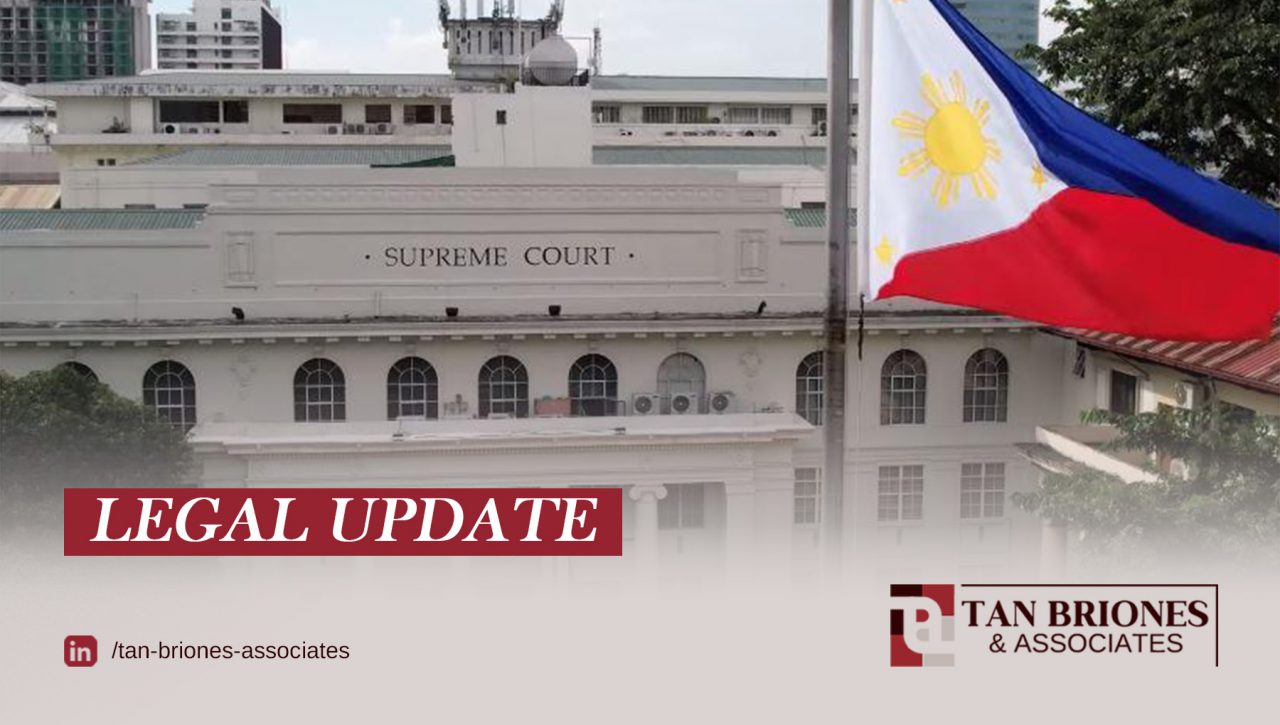
The Supreme Court (SC) has ruled that a woman is entitled to a 50% ownership share in a Quezon City house and lot she helped acquire with her former same-sex partner, applying existing civil law principles on co-ownership and actual contribution.
In a decision penned by Associate Justice Jhosep Y. Lopez, the Court reversed earlier rulings and declared Jennifer C. Josef a co-owner of the property registered in the name of Evalyn G. Ursua, after finding sufficient proof of Josef’s contribution to its acquisition and improvement.
FACTS AND ISSUE
The case stemmed from the cohabitation of Josef and Ursua, who lived together as a couple beginning in 2005. In 2006, they purchased a house and lot in Don Antonio Heights, Quezon City, which was registered solely in Ursua’s name to facilitate bank transactions. After their separation, the parties initially agreed to sell the property and divide the proceeds equally.
In 2007, Ursua executed an Acknowledgment of Third-Party Interest in Real Property, stating that Josef had financed and paid about 50% of the expenses for the acquisition and renovation of the property. However, Ursua later refused to recognize Josef as a co-owner, prompting Josef to annotate an adverse claim on the property title and eventually file a complaint for partition and damages.
Ursua countered that she was the exclusive owner of the property, arguing that Josef failed to present records proving monetary contribution and claiming that the acknowledgment merely contemplated possible reimbursement, not co-ownership.
The Regional Trial Court (RTC) dismissed Josef’s complaint and ordered the cancellation of the adverse claim. The Court of Appeals (CA) affirmed the dismissal but deleted the awards of damages against Josef.
The main issue elevated to the SC was whether the acknowledgment executed by Ursua sufficiently established co-ownership in favor of Josef.
THE RULING
The SC granted Josef’s petition, reversed the CA, and declared her a co-owner of 50% of the subject property. The case was remanded to the RTC for further proceedings on the partition.
The Court ruled that the acknowledgment signed by Ursua constituted proof of Josef’s actual contribution, satisfying the requirements of Article 148 of the Family Code, which governs property relations of couples who are not legally capacitated to marry, including same-sex partners.
While noting ambiguity in the wording of the acknowledgment, the Court applied the rule that contractual ambiguities are construed against the party who caused them, in this case Ursua.
“Any ambiguity in its provision must be taken against her,” the Court said, adding that Ursua was estopped from later denying Josef’s contribution after having expressly acknowledged it in writing.
Follow Tan Briones & Associates on LinkedIn for more legal updates and law-related articles.