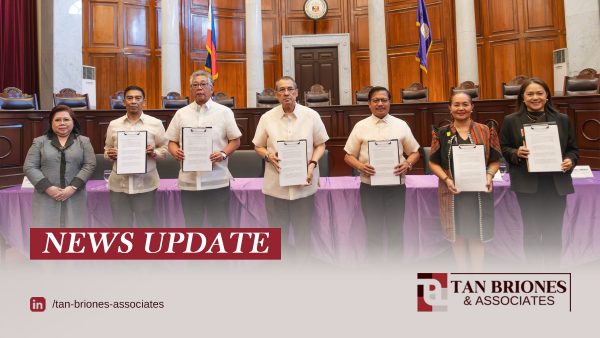

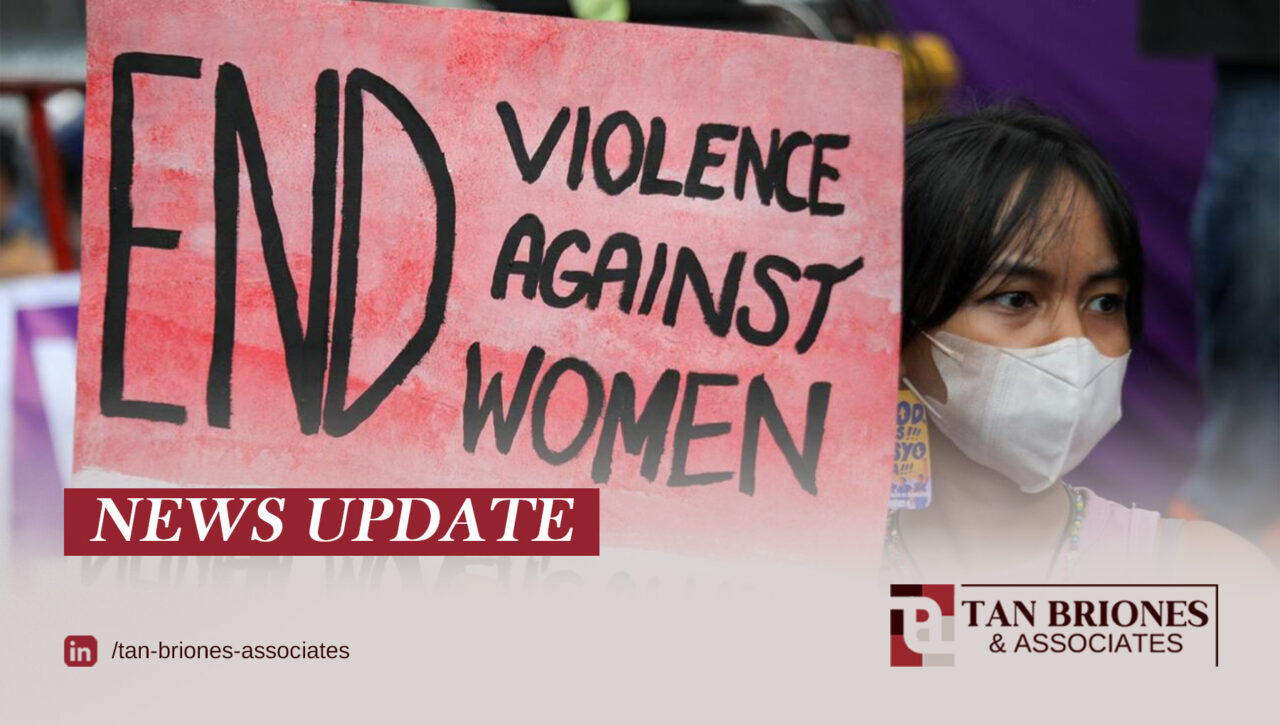
The Supreme Court (SC) called for a whole-of-nation approach to ending violence against women (VAW), while the Commission on Human Rights (CHR) urged the creation of safer digital environments for women and girls and pressed for stronger action to eliminate online gender-based violence.
The call was made as the Judiciary formally launched the 2025 18-Day Campaign to End Violence Against Women on November 24, while the CHR separately marked the International Day for the Elimination of Violence Against Women on November 25, both underscoring the urgency of addressing technology-facilitated gender-based violence alongside long-standing forms of abuse.
SC Chief Justice Alexander G. Gesmundo stressed that ending VAW cannot be left to institutions alone but demands active participation from all sectors of society.
“A whole-of-nation approach means that we do not only rely on our institutions to lead meaningful change when it comes to ending VAW. It calls upon each and every person to contribute to the advocacy in whatever capacity they can,” Gesmundo said.
He outlined four ways the Judiciary can strengthen its response: ensuring the fair, firm, and timely application of laws protecting women; providing regular gender-sensitivity training for court personnel; promoting ethical conduct in the legal profession, particularly in courtrooms; and sustaining collaboration with government agencies, civil society, and the academe to boost prevention and awareness.
Meanwhile, Associate Justice Jhosep Y. Lopez, co-chairperson of the SC’s Committee on Gender Responsiveness in the Judiciary (CGRJ), highlighted the growing threat of online abuse, warning that digital platforms have become new arenas for exploitation.
Citing data from the Foundation for Media Alternatives, Lopez said reported cases of online sexual abuse in the first half of 2025 have already doubled those recorded in the whole of 2024, with sextortion emerging as the most prevalent form.
“Violence against women is not just a personal tragedy—it is a societal injustice,” Lopez said, noting that 75 percent of reported perpetrators are known to their victims.
He emphasized that while laws such as the Violence Against Women and their Children Act, the Safe Spaces Act, and the Anti-OSAEC and CSAEM Act provide strong legal protection, their effective enforcement requires vigilance, empathy, and resolve.
Parallel to the Judiciary’s call, the CHR urged stronger safeguards in cyberspace, warning that technology-facilitated gender-based violence, including online harassment, stalking, and the non-consensual sharing of intimate images, poses real and lasting harm to women and girls.
“The anonymity afforded by digital platforms often emboldens perpetrators, creating spaces where harassment and exploitation thrive,” the CHR said, stressing that abuse committed online has tangible, real-world consequences that place women and girls at greater risk.
The CHR emphasized that addressing digital violence requires stronger legal mechanisms, improved digital literacy, survivor-centered support services, and a culture of accountability both online and offline.
As the country’s Gender Ombud, the CHR reiterated that while women and girls must be empowered to assert their rights, men and boys also share responsibility in respecting and upholding these rights.
It further called on the government to close persistent gaps in the implementation of existing laws, including the Magna Carta of Women and the Safe Spaces Act, to ensure protection extends fully into digital spaces.
The 18-Day Campaign to End VAW is observed globally from November 25 to December 10 and mandated in the Philippines under Republic Act No. 10398.
Follow Tan Briones & Associates on LinkedIn for more legal updates and law-related articles.