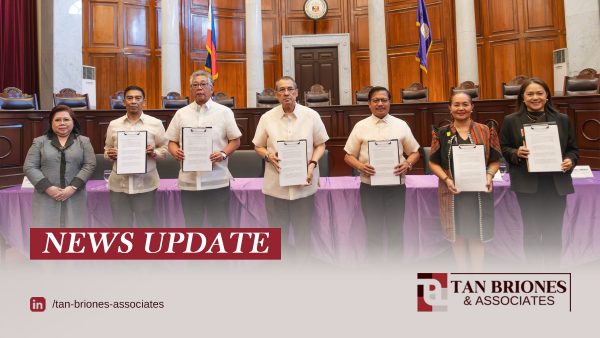


The long-delayed Shari’ah High Court in Bangsamoro Autonomous Region in Muslim Mindanao (BARMM) is expected to finally take shape as the Supreme Court (SC) moves to operationalize its creation.
In a resolution adopted by the Court en banc on January 21, the Office of the Court Administrator and the Fiscal and Budget Management Office was directed to prepare the proposed budget and staffing pattern for the new court’s operations in the next fiscal year, following a request from the Bangsamoro Transition Authority (BTA) Parliament.
The resolution, penned by Associate Justice Japar B. Dimaampao, stems from A.M. No. 24-07-31-SC, which covers the BTA’s request for the immediate organization of the Shari’ah High Court under Article X of Republic Act No. 11054, or the Organic Law for the Bangsamoro Autonomous Region in Muslim Mindanao.
The BTA Parliament, in its resolution and accompanying request, underscored what it described as the urgent need to establish the Shari’ah High Court to fully implement the justice framework mandated under the Bangsamoro Organic Law.
According to the resolution, appeals from Shari’ah courts are currently taken to the Court of Appeals pending the organization of the Shari’ah High Court, leaving the region without a dedicated appellate court for Shari’ah cases.
The BTA noted that the absence of a Shari’ah High Court affects the full implementation of the Shari’ah justice system envisioned under the Bangsamoro law.
For its part, the SC said the Bangsamoro Organic Law provides for a three-level Shari’ah court system composed of Shari’ah circuit courts, Shari’ah district courts, and a Shari’ah High Court, the last of which has yet to be organized.
The Court said its authority to propose the funding and personnel structure of the new court is grounded in Republic Act No. 12233, or the Judiciary Fiscal Autonomy Act, which grants the judiciary discretion to determine the budgetary and staffing requirements of courts, including Shari’ah courts at all levels.
It also reaffirmed its commitment to strengthening justice mechanisms in the Bangsamoro, saying it aims to give effect to the law’s vision of dispensing justice in a manner consistent with the region’s “unique cultural and historical heritage.”
Follow Tan Briones & Associates on LinkedIn for more legal updates and law-related articles.