
The Supreme Court (SC) will designate special regional trial courts (RTCs) to exclusively handle corruption cases involving anomalous flood control and other government infrastructure projects, to speed up graft trials and improve judicial efficiency.
In a statement, the SC said the Office of the Court Administrator (OCA) has been directed to monitor the filing of corruption cases involving infrastructure projects before the RTCs. Once these cases are filed, the high court will assign special courts to handle them exclusively.
“Once such cases are filed, the SC will designate special courts to exclusively hear and decide corruption-related cases arising from infrastructure projects,” the high court said.
The initiative comes amid the government’s ongoing probe into alleged irregularities in flood control projects, with President Ferdinand Marcos Jr. urging authorities to build “solid, strong cases” against those behind the misuse of public funds, as losses from the anomalous projects are estimated to have reached trillions of pesos.
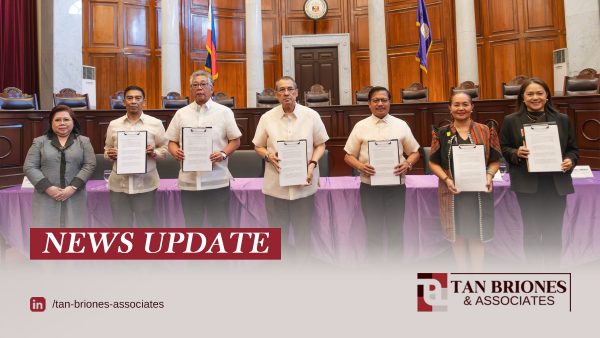
Chief Justice Alexander Gesmundo said the SC en banc would also review and deliberate on the Sandiganbayan’s proposed guidelines to fast-track flood control cases.
“Any suggestions and recommendations from the Sandiganbayan to expedite the cases involving flood control projects—for sure we will review immediately these rules and see to it that they are implemented and properly drafted,” Gesmundo said.
Sandiganbayan Presiding Justice Geraldine Faith Econg earlier said the anti-graft court is eyeing to resolve such cases within six to eight months.
Meanwhile, Senior Associate Justice Marvic Leonen disclosed that the judiciary is conducting its own due diligence on infrastructure projects built by the Department of Public Works and Highways (DPWH) for the courts.
He said some of the contractors involved in judicial construction projects appeared on the President’s list of firms that cornered major flood control contracts.
“Fortunately, most of the projects right now have been built, but in order to make sure that we were not shortchanged we are doing our own due diligence,” Leonen said.
Furthermore, the SC emphasized that while it supports ongoing anti-corruption efforts, the judiciary will remain impartial and focused on upholding due process as cases reach the courts.
“The judiciary has to remain impartial. At the end of the day, we will have to receive the evidence, and we are hoping that the cases are built up properly,” Gesmundo added.
Follow Tan Briones & Associates on LinkedIn for more legal updates and law-related articles.