
Stronger implementation of the Juvenile Justice and Welfare Act is being pushed to ensure that children in conflict with the law (CICL) are given genuine opportunities for recovery, development, and reintegration into society.
In a statement, Department of Social Welfare and Development (DSWD) Assistant Secretary Irene Dumlao said that the law will remain ineffective unless the policies, interventions, and systems designed to protect minors are continuously improved.
“By proper implementation, we mean providing adequate resources, sustained capacity-building for personnel, continuous coordination among agencies, and the active involvement of communities in creating a safe and supportive environment for CICL,” Dumlao said.
Data from the Juvenile Justice and Welfare Council (JJWC), an attached agency of the DSWD, shows a significant decrease in the recorded involvement of minors in criminal activity over the past decade.
From a peak of 26,000 cases in 2017, CICL-related incidents declined to just over 4,000 in 2024. However, JJWC Executive Director Tricia Clare Oco reported a slight increase this year, noting that the number has risen to around 5,000 cases in 2025.
Dumlao noted that the DSWD continues to support local government units in managing Bahay Pag-Asa (BPA) youth care facilities by providing technical assistance and ensuring that BPAs are responsibly operated, secure, and sufficiently equipped to cater to the needs of CICL.
According to the DSWD, technical assistance continues to be provided to local governments operating Bahay Pag-Asa (BPA) facilities to ensure that youth centers remain safe, professionally managed, and fully equipped to provide care for children in conflict with the law (CICL).
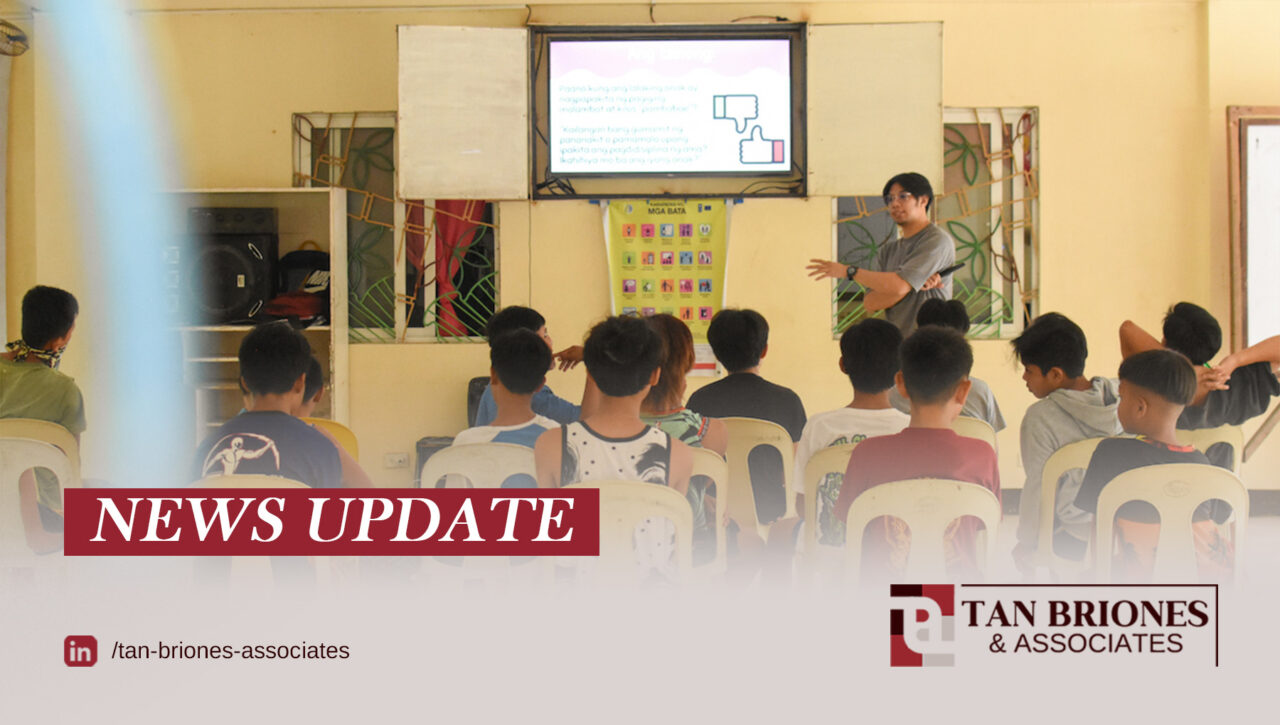
Among the support measures is the Buklod Paglaom para sa CICL: Holistic Psychosocial and Economic (HoPE) Interventions program, which the DSWD said provides structured center- and community-based interventions for 12- to 15-year-old minors accused of serious or repeated offenses, carried out within BPAs by a multidisciplinary team.
For minors with suspended cases, the DSWD noted that the Regional Rehabilitation Center for Youth provides psychosocial services, education, vocational training, and reintegration support to help them return to their families and communities with strengthened social and life skills.
Follow Tan Briones & Associates on LinkedIn for more legal updates and law-related articles.