
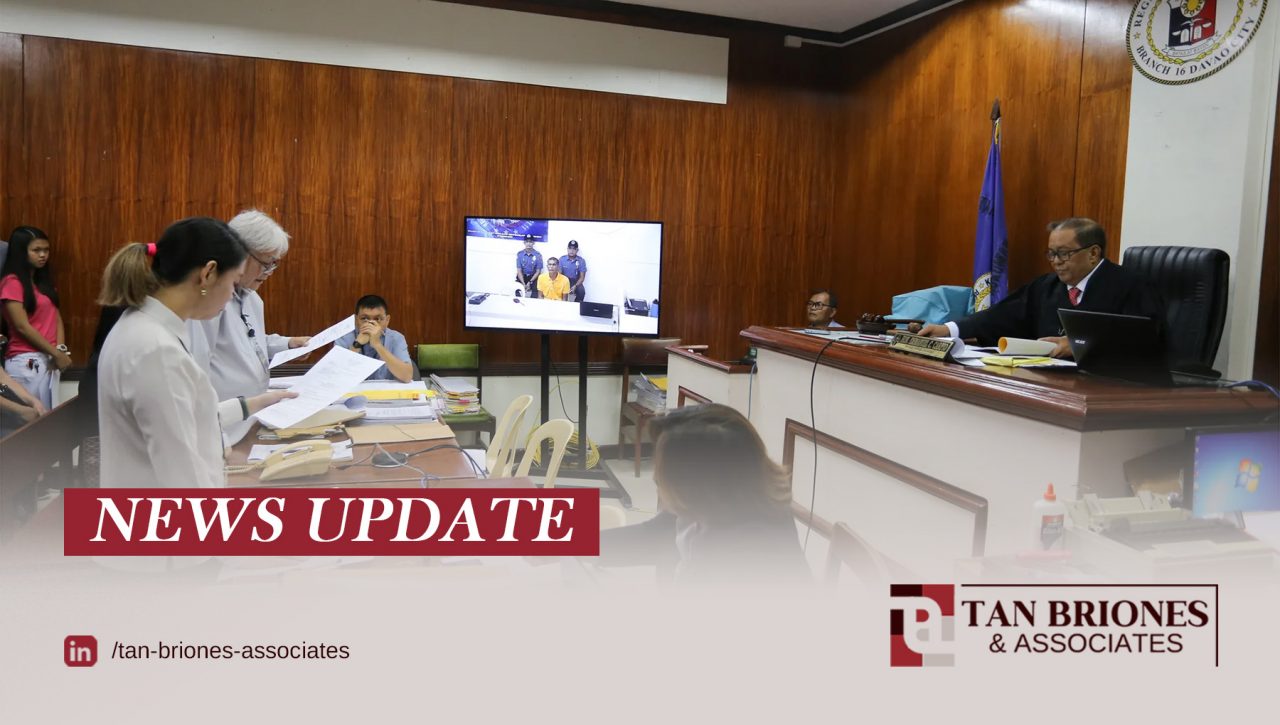
The use of videoconferencing in trial court proceedings has been reiterated to prevent avoidable delays when parties or witnesses cannot appear in person, reinforcing existing Supreme Court (SC) guidelines aimed at ensuring the uninterrupted administration of justice.
In OCA Circular No. 143-2026 dated July 28, Court Administrator Ma. Theresa Dolores C. Gomez-Estoesta highly encouraged judges of first- and second-level courts to use videoconferencing in applicable circumstances after the Office of the Court Administrator (OCA) received information that difficulties with in-person appearances were contributing to hearing delays.
The OCA cited difficulties in transporting persons deprived of liberty (PDLs), as well as law enforcement officers who failed to testify because they were on study leave or had been reassigned to another duty station.
“Hence, delays which may be prevented through the use of videoconferencing are unacceptable. The efficient and fair delivery of justice must remain an utmost priority for all trial courts,” the circular stated.
The circular reiterated Administrative Matter No. 24-11-02-SC, or the Amendments to the Guidelines on the Conduct of Videoconferencing, under which videoconferencing applies to all court actions and proceedings, regardless of stage, in both criminal and civil cases. The amended guidelines took effect on Feb. 16.
Courts may, on their own initiative, order proceedings to be conducted through videoconferencing at any or all stages.
In criminal cases, videoconferencing is the preferred mode at all stages of proceedings involving PDLs and children in conflict with the law (CICLs).
It is also preferred for arraignments, bail hearings and hearings involving minor incidents, including clarificatory and compliance hearings and similar ancillary matters where the accused’s presence is unnecessary, unless the court deems an in-person appearance appropriate.
“Accordingly, all first- and second-level court judges are highly encouraged to utilize videoconferencing in all applicable circumstances in order to avoid delays in court proceedings and ensure the uninterrupted dispensation of justice,” the circular stated.
Follow Tan Briones & Associates on LinkedIn for more legal updates and law-related articles.