
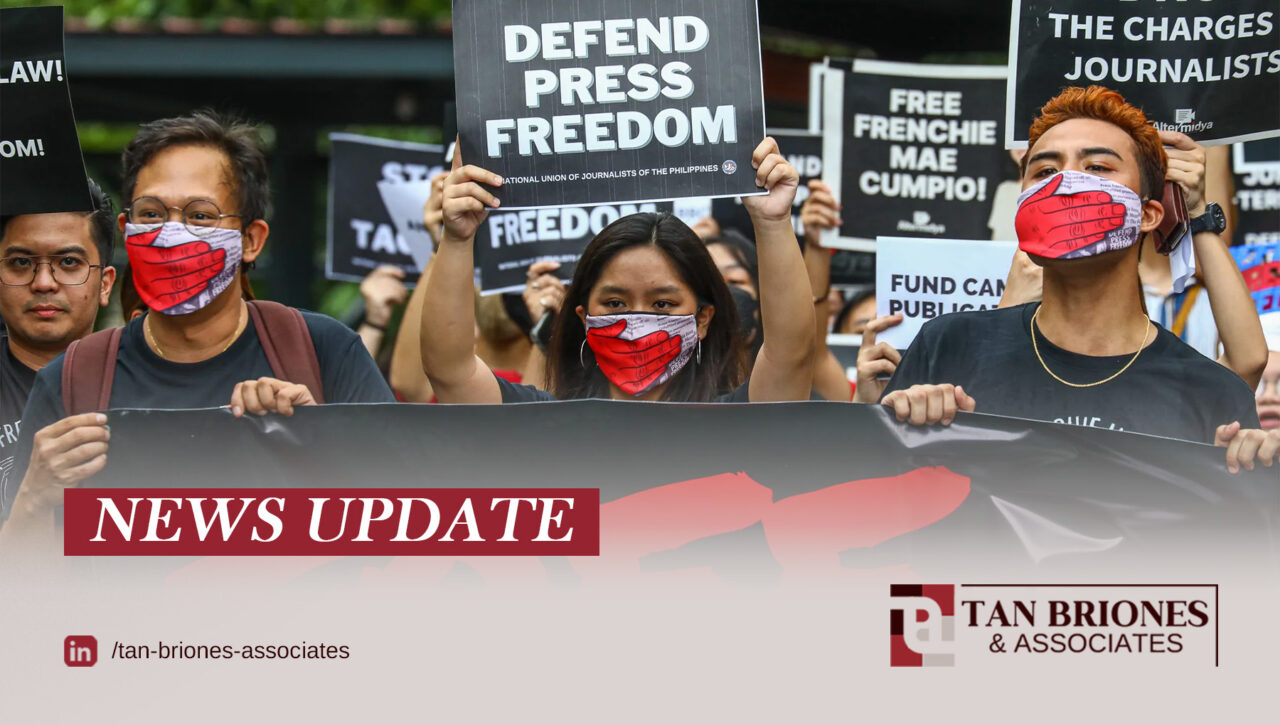
The University of the Philippines Diliman College of Media and Communication (UP CMC) warned that 12 pending House bills seeking to regulate “fake news” would endanger press freedom and free expression.
In a position delivered by journalism professor Danilo A. Arao before the House Committee on Public Information on November 18, UP CMC urged lawmakers to reject the measures due to their broad, punitive, and censorial implications, stressing that the proposals—ranging from amendments to the Cybercrime Prevention Act to new content-regulation mandates—pose serious threats to free expression, media independence, and digital rights.
Among the 12 bills, three seek to amend Republic Act No. 10175 to impose penalties for “fake news,” six aim to create new anti-“fake news” laws, and three others propose regulations on internet intermediaries, mandatory registration of social media accounts, and the creation of a government office empowered to take down online content.
Arao said legislating media content is “not the solution,” stressing that broad or vague definitions of “fake news” can be weaponized against criticism and legitimate journalistic work.
“Controlling media content carries with it the dangerous tendency of suppressing journalism practice and even freedom of expression in general,” he told lawmakers.
He added that rather than expanding RA 10175, Congress should consider calls for its repeal, citing the “chilling effect” of cyberlibel on journalists and the decade-long opposition of media groups to the law.
UP CMC also rejected proposals for mandatory social media registration and oversight of internet intermediaries, calling them unrealistic, unnecessary, and prone to abuse.
“The government does not need to intervene lest it be misconstrued as a convenient excuse to surveil the population,” Arao said.
The college further opposed the creation of a Department of Information and Communications Technology (DICT) office authorized to remove online content, noting past controversies involving the National Telecommunications Commission’s widely opposed 2022 order blocking 27 websites, including those of two media outlets.
On proposals to legally constitute a digital media council and impose requirements on digital platforms, UP CMC argued that such moves undermine the principle of media self-regulation and could burden emerging online news operations and start-ups.
Instead of criminalizing content, the college urged lawmakers to strengthen press freedom and journalist safety by conducting inquiries into human rights violations against media workers, decriminalizing libel, and passing a genuine freedom of information law with a “sunshine clause and swift access to public records.”
UP CMC noted that its current position echoes its stance in 2017, when faculty members similarly rejected earlier versions of anti-“fake news” bills.
Follow Tan Briones & Associates on LinkedIn for more legal updates and law-related articles.