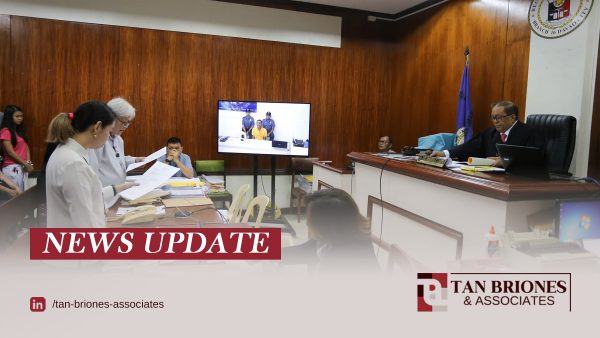


The Supreme Court (SC) upheld the conviction of five men involved in a 2004 abduction, ruling that the loss or non-presentation of ransom money in court does not create reasonable doubt in a kidnapping-for-ransom case when the demand and other elements of the crime are sufficiently proven.
In a decision penned by Associate Justice Ricardo R. Rosario, the SC First Division dismissed the appeal of Jose Olbato, Jaime Tolevas, Romeo Aruta, Rodrigo Aruta and Alberto Culanag and affirmed in full the Court of Appeals (CA) decision sustaining their conviction and sentence of reclusion perpetua without eligibility for parole.
“The ransom money is not the corpus delicti of the crime of kidnapping for ransom,” the Court said.
FACTS AND ISSUE
The case stemmed from the March 18, 2004 abduction of Genevieve Ong Sy, who was flagged down while driving in Manila, forcibly taken from her vehicle and eventually detained in a house in Antipolo City. Her kidnappers initially demanded P50 million from her father for her release, but the amount was negotiated down to P500,000.
After the ransom was delivered, Police Anti-Crime Emergency Response operatives conducted surveillance and rescue operations. Genevieve was rescued from the Antipolo house on March 20, while several suspects were arrested and the P500,000 ransom money was recovered during the operations.
The accused denied the charges and raised defenses of denial, alibi and frame-up. They also challenged Genevieve’s identification of them and the finding of conspiracy, while one co-accused claimed that he and Genevieve had been in a romantic relationship and that the kidnapping allegation had been fabricated.
The Quezon City Regional Trial Court (RTC) convicted Olbato, Tolevas, Romeo Aruta, Rodrigo Aruta, Culanag and several co-accused of kidnapping for ransom and sentenced them to reclusion perpetua without eligibility for parole. Two other accused were acquitted for failure to prove their guilt beyond reasonable doubt.
The RTC found the prosecution’s evidence sufficient to establish the kidnapping and conspiracy, while rejecting the defenses of denial and alibi. The CA later affirmed the ruling in full, finding that the elements of kidnapping for ransom were proven and that the loss of the ransom money was immaterial.
Before the SC, the five appellants maintained that the prosecution failed to establish their guilt beyond reasonable doubt, challenging, among others, the proof of ransom, the victim’s testimony and identification of them, and the finding of conspiracy.
RULING
The SC found no reason to overturn the lower courts’ findings, ruling that the prosecution sufficiently established the elements of kidnapping for ransom through testimonial and documentary evidence. It found that Genevieve was forcibly taken and unlawfully detained and that the ransom demand and payment were sufficiently proven.
The Court rejected the argument that the loss of the P500,000 created reasonable doubt, stressing that whether ransom money was actually paid or received is immaterial and that the money itself is not the corpus delicti of kidnapping for ransom.
“The fact that the PHP 500,000.00 ransom was not presented in court does not negate the occurrence of the demand and payment, both of which were clearly established by testimonial and documentary evidence,” the Court said.
The SC also upheld the finding of conspiracy and rejected the accused’s challenges to the victim’s identification and testimony, as well as their defenses of denial, alibi and frame-up. It further held that the police officer involved acted outside his official duties in detaining the victim for ransom and was therefore considered a private person for purposes of the offense.
Accordingly, the SC affirmed the five appellants’ convictions and sentences of reclusion perpetua without eligibility for parole, along with the damages awarded to the victim. The Court separately dismissed the case against SPO4 Romeo Ayson, whose death pending appeal extinguished his criminal and civil liability arising from the offense.
Follow Tan Briones & Associates on LinkedIn for more legal updates and law-related articles.