
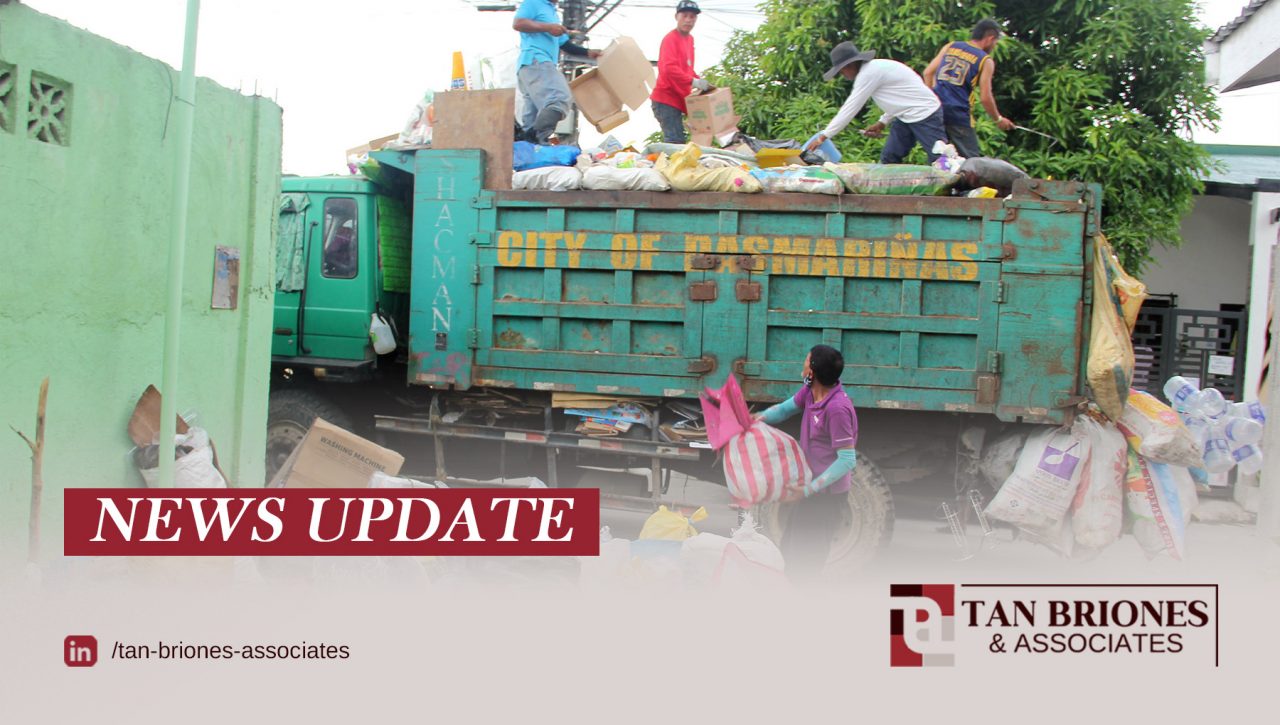
Waste workers in the government, private and informal sectors would be granted broader labor, health and social protections under a Senate bill seeking to establish safeguards for people engaged in waste collection, processing and disposal.
Senate Bill No. 162, or the proposed Magna Carta of Waste Workers, filed by Sen. Loren Legarda, would provide fair compensation, hazard pay, social protection, health services, occupational safety measures and appropriate personal protective equipment to workers engaged in the management, collection, transportation, processing and disposal of solid and hazardous wastes and toxic substances.
Under the bill, waste workers would be covered by appropriate social protection programs, including mandatory SSS or GSIS coverage, as applicable, as well as Pag-IBIG Fund and PhilHealth membership.
Those regularly exposed to occupational and health hazards or high-risk working conditions would also be entitled to hazard pay, subject to applicable labor and occupational safety rules.
The measure would also require free annual physical, dental, mental health and psychosocial examinations, as well as an occupational health and safety program providing appropriate personal protective equipment based on the nature of the workers’ jobs.
For private-sector waste workers, the bill would guarantee at least the applicable regional minimum wage for non-agricultural workers and provide for night-shift differential, overtime pay and additional compensation for work on holidays and rest days in accordance with existing labor laws and regulations.
Private-sector waste workers would also be protected from dismissal except for a just or authorized cause and after due process, while retaining the right to form or join labor organizations, cooperatives or associations and engage in collective bargaining and other lawful concerted activities.
For government waste workers, meanwhile, local government units (LGUs) would establish programs for access to health care and endeavor to provide financial assistance during crises.
The bill would also require LGUs to include waste workers in annual cash incentives for their personnel and qualified workers among the target beneficiaries of socialized housing programs.
For those in the informal sector, the measure would allow waste workers to form or join organizations or associations that may be registered with the Department of Labor and Employment (DOLE) or other appropriate agencies, with such recognition serving as a basis for access to government support, representation and participation in decisions affecting their work and welfare.
Beyond these sector-specific protections, waste workers would have the right to participate in the formulation, implementation, monitoring and evaluation of policies affecting waste management and labor rights, as well as representation in city or municipal and barangay solid waste management boards.
To carry out the proposed law, LGUs would coordinate with the DOLE on its implementation in their respective localities, while other government agencies would be assigned responsibilities involving social protection, environmental management, training, health care and legal assistance.
In particular, the Public Attorney’s Office would be tasked with providing waste workers legal representation, counseling and assistance in cases involving employment, working conditions and rights violations, as well as in mediation and arbitration proceedings.
In its explanatory note, the bill cites low wages, job insecurity, exposure to hazardous materials and limited access to social protection and health care among the challenges faced by formal and informal waste workers.
Follow Tan Briones & Associates on LinkedIn for more legal updates and law-related articles.