
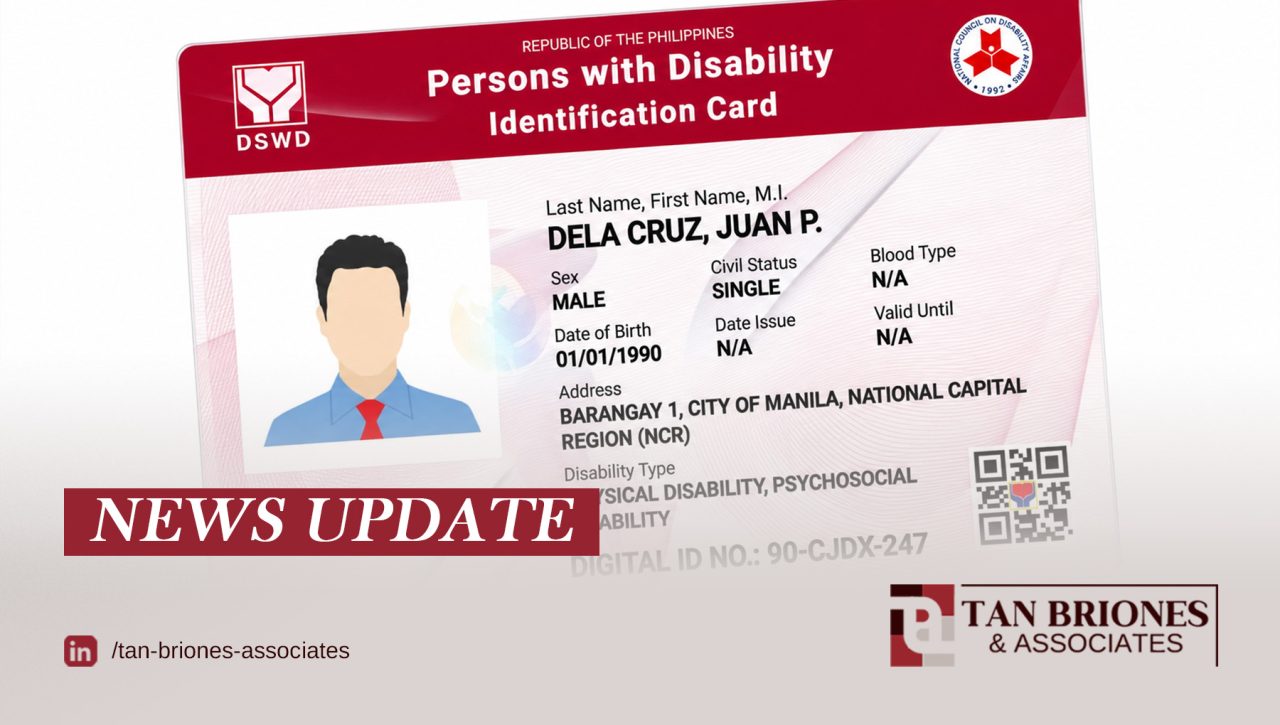
A unified disability ID system will make locally issued cards verifiable nationwide to curb the use of fake and duplicate cards.
The National Council on Disability Affairs (NCDA) set out the system in Administrative Order No. 001, series of 2026, dated June 2, which provides for a phased rollout and a three-year transition.
Existing cardholders must register under the unified system even if their current IDs are still valid, NCDA Executive Director Glenda Relova said.
The NCDA and the Department of Social Welfare and Development (DSWD) will jointly manage the registry, while cities and municipalities will continue to verify applications and issue IDs.
The order provides for ID verification by QR code or barcode and allows local governments to print cards on request.
Authorities may cancel erroneous, duplicate or fraudulent registrations while retaining the records for audit.
At an Oct. 21 Senate budget hearing, Social Welfare Secretary Rex Gatchalian said local issuance had produced about 1,500 different ID designs, making it difficult for businesses to verify cards consistently.
Gatchalian also said his department was working with the health and finance departments on a separate amendment to the implementing rules of Republic Act No. 10754 that would authorize the DSWD to issue IDs.
For eligibility decisions, the order requires local governments to use Department of Health disability categories.
“A medical condition is not automatically a disability, but it may lead to one,” the NCDA said in a separate statement on disability classification, explaining that eligibility depends on how substantially a condition limits daily activities and participation.
The council said people with non-apparent disabilities may qualify if they submit a certificate of disability from a qualified specialist.
Under Article V of the order, people with permanent disabilities are to receive lifetime IDs, while people with non-apparent disabilities must undergo revalidation every five years or as specified in the implementing guidelines.
A separate provision in Article VI states that the validity entered in local records is subject to an NCDA decision pending legislation on lifetime or permanent IDs.
The revalidation provisions require reasonable accommodations and bar the suspension or denial of benefits without due process.
The order allows applicants to register without a Philippine Identification System number and calls for mobile registration in remote and underserved areas.
It also requires every local government to establish a process for handling complaints about ID issuance.
Follow Tan Briones & Associates on LinkedIn for more legal updates and law-related articles.