
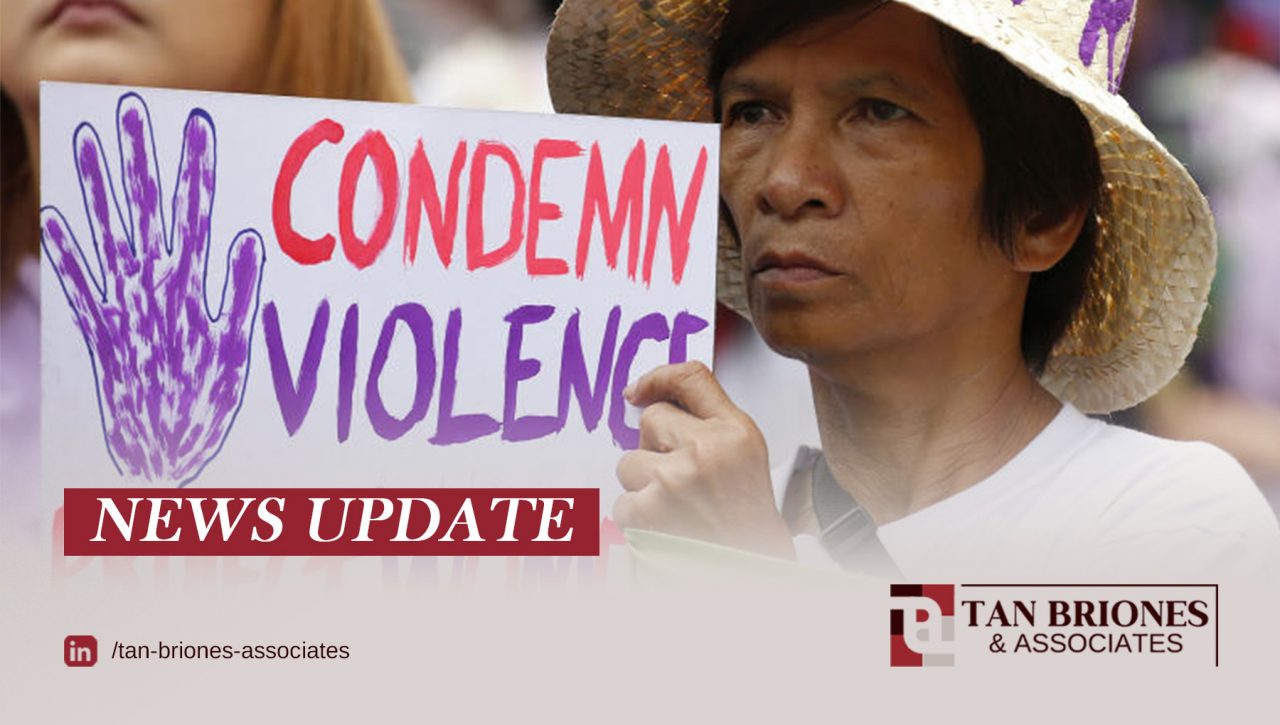
A bill filed in the House of Representatives seeks to remove provisions in the Revised Penal Code (RPC) that allow marriage or forgiveness to extinguish criminal action or penalties for rape, addressing what advocates consider a longstanding gap in protections for survivors of sexual violence.
House Bill No. 10099, filed by Reps. Dadah Kiram Ismula, Jose Manuel Tadeo “Chel” Diokno and Percival Cendaña of Akbayan Party-list and Dinagat Islands Rep. Kaka Bag-ao, seeks to repeal Article 266-C, or the “forgiveness clause,” and amend related provisions of the RPC.
“There is no place in a just society for a law that allows criminal accountability for rape to be erased through marriage,” Philippine Commission on Women (PCW) Chairperson Ermelita V. Valdeavilla said in a statement supporting the measure.
Under Article 266-C, the subsequent marriage of the offender and the victim may extinguish the criminal action or penalty for rape, while a wife’s forgiveness may have the same effect when her husband committed the offense. HB 10099 would repeal the provision and make corresponding changes to other provisions of the RPC.
Ending the ‘forgiveness clause’
Aside from repealing Article 266-C, the measure would amend Article 23 by removing the exception to the rule that pardon by the offended party does not extinguish criminal action. An express waiver may still extinguish civil liability concerning the injured party’s interest.
The bill would also make conforming amendments to Articles 89 and 344, including removing provisions under which marriage or pardon may extinguish criminal liability, criminal action or penalties in specified offenses.
PCW said the existing provision effectively allows criminal accountability for rape to be set aside through a private arrangement.
“Article 266-C reduces a public crime to a private compromise. It allows perpetrators to force survivors into marriage to evade justice, trapping women in abusive unions and perpetuating continuous trauma,” Valdeavilla said.
The bill’s explanatory note likewise argues that permitting marriage or pardon to absolve offenders can leave victims bound to their aggressors and allow perpetrators to avoid accountability.
Push for consent-based rape law
PCW said repealing Article 266-C is part of its Women’s Priority Legislative Agenda and is necessary to establish what it described as a consent-based legal framework for rape, in which the absence of freely given consent is the central consideration.
Under such a framework, the commission said consent cannot be inferred from marriage or other relationships, silence, lack of physical resistance or clothing.
PCW also linked the proposed repeal to the country’s commitments under Republic Act No. 9710, or the Magna Carta of Women, and the United Nations Convention on the Elimination of All Forms of Discrimination against Women (CEDAW).
According to the commission, the UN CEDAW Committee has repeatedly called on the Philippines since 2006 to remove discriminatory legal provisions that allow perpetrators of sexual violence to avoid accountability through marriage or pardon.
Citing Philippine National Police data, PCW said 1,842 cases under the Anti-Rape Law were recorded in 2025. The commission also argued that provisions such as Article 266-C contribute to underreporting by reinforcing gender-insensitive processes and stigma against survivors.
The repeal has long been among PCW’s legislative priorities. The bill’s explanatory note states that the commission has included the removal of the forgiveness clause in its legislative agenda since the 15th Congress.
PCW urged both chambers of Congress to prioritize the measure, maintaining that marriage or forgiveness should not erase criminal accountability for rape.
Follow Tan Briones & Associates on LinkedIn for more legal updates and law-related articles.