
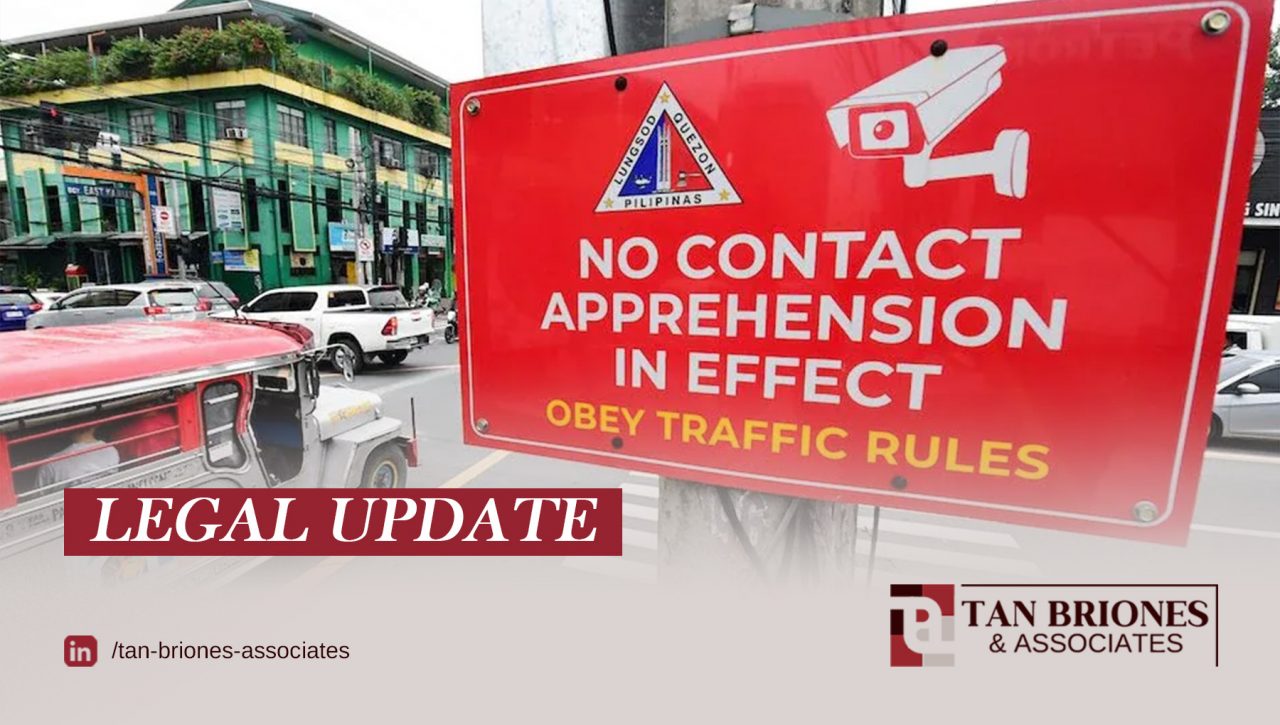
The Supreme Court (SC) has dismissed petitions challenging no-contact apprehension ordinances in five Metro Manila cities without ruling on their constitutionality, finding that subsequent changes to the traffic enforcement framework rendered the challenges moot and that procedural defects barred a review of the substantive issues.
In a decision penned by Associate Justice Jose Midas P. Zalameda, the SC en banc dismissed the consolidated petitions questioning the No Contact Apprehension Policy (NCAP) ordinances of Manila, Quezon City, Valenzuela City, Parañaque City, and Muntinlupa City and lifted the temporary restraining order it issued in 2022.
“Threshold grounds determined the disposal of the present Petitions. Far from being merely technical, these jurisdictional defects foreclose further any inquiry on the substantive issues,” the Court said.
FACTS AND ISSUE
The cases stemmed from ordinances enacted by several Metro Manila cities to implement NCAP, a technology-based traffic enforcement system that uses cameras and other digital tools to detect and document violations without the immediate physical apprehension of motorists.
Three petitions filed by transport groups, a lawyer, and taxi operators challenged the ordinances, arguing that they violated due process and privacy rights, imposed liability on registered vehicle owners who were not necessarily driving when violations occurred, and conflicted with Republic Act No. 4136, or the Land Transportation and Traffic Code.
One petitioner, lawyer Juman B. Paa, said he discovered four traffic violations only after the registration of his vehicle was refused. He questioned the assessment of P20,360 in fines and penalties and argued that the notices had been sent to an incorrect address.
The respondent local governments sought the dismissal of the petitions on procedural grounds and maintained that NCAP was a valid exercise of delegated police power intended to promote traffic discipline, efficient road use, and public safety.
On August 30, 2022, the SC issued a temporary restraining order stopping the respondent cities and concerned agencies from implementing the challenged NCAP measures. The Court partially lifted the order in May 2025 to allow the Metropolitan Manila Development Authority (MMDA) to implement NCAP along circumferential and radial roads under its traffic enforcement jurisdiction.
During the pendency of the cases, the Metro Manila Council adopted the Metro Manila Traffic Code of 2023 to establish uniform traffic regulations under a single-ticketing system. The respondent cities subsequently enacted ordinances aligning their traffic enforcement rules with the new framework.
The main issue before the SC was whether it could exercise judicial review and rule on the constitutional and legal challenges despite the intervening changes to the NCAP framework and the procedural defects raised against the petitions.
THE RULING
The SC dismissed the petitions after finding that the challenged ordinances had been functionally superseded by new regulations aligned with the Metro Manila Traffic Code of 2023, rendering the cases moot.
The Court said the adoption of uniform NCAP standards had ended the decentralized and fragmented implementation challenged by the petitioners. Since neither the new traffic code nor the ordinances adopting it were challenged, a ruling on the previous ordinances would no longer provide practical relief.
“The relief sought, in fine, would be illusory,” the Court said.
The SC also found jurisdictional defects that prevented it from proceeding to the substantive issues, including Paa’s failure to exhaust available administrative remedies and justify bypassing the lower courts. It stressed that constitutional questions may be resolved only when the requirements for judicial review are met.
“Procedural rules are not suspended by mere prominence of the controversy presented,” the Court said. “The Court cannot act when its jurisdiction has not been properly invoked.”
The dismissal was without prejudice to future challenges should the modified implementation of NCAP give rise to an actual and justiciable controversy.
The SC consequently lifted the temporary restraining order against the respondent cities, the Land Transportation Office, and all parties acting on their behalf.
Follow Tan Briones & Associates on LinkedIn for more legal updates and law-related articles.